Respite Care in Ireland: What It Is & How to Arrange It
Updated: Sep 10
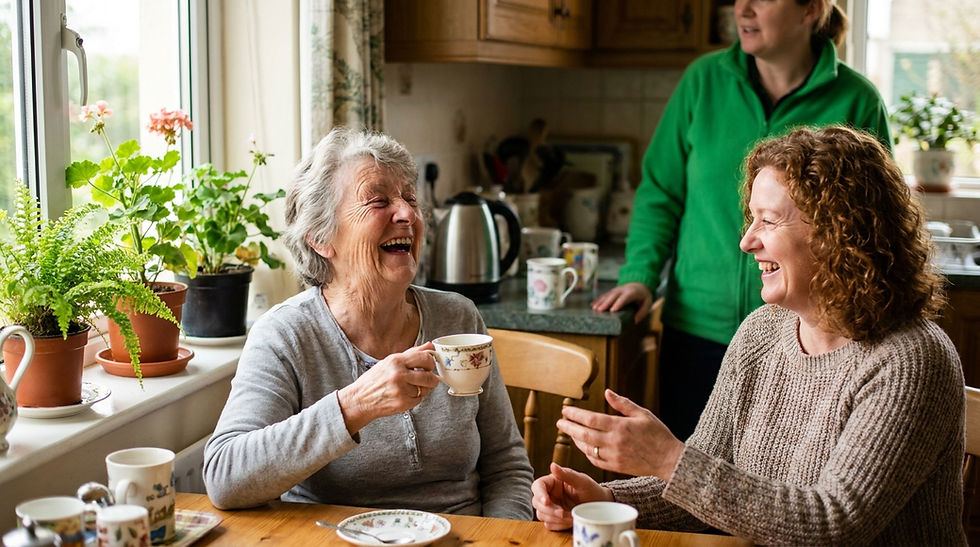
Respite care in Ireland means bringing in a professional carer for a short, defined period so a family carer can rest, travel, recover from illness, or simply catch their breath. It can run for a few days or a few weeks, and it happens in the comfort of your parent's own home. If you've been caring for someone day in, day out and you're exhausted, arranging respite isn't a failure — it's what keeps good care going for the long run. This guide explains what respite care involves, how quickly it can be arranged, what it costs, and where it fits alongside other home care options.
What Is Respite Care?
Respite care is short-term, professional care provided in the home to give a family carer a planned break. A carer comes in for a set period, from a long weekend to several weeks, taking over the day-to-day support so the usual family carer can step back without worrying that anything is being missed.
United Irish Healthcare (UIH) provides respite care nationwide, matching a vetted, insured carer to the client's routine, personality and support needs for the length of the break. It's the same standard of care as our ongoing home care, just arranged for a fixed window rather than an open-ended commitment.
Why Do Family Carers Need Respite in Ireland?
Family carers need respite because caring around the clock, unpaid, for months or years takes a real toll on health, relationships and work — and stepping back for a break is a responsible act, not a selfish one.
Carer burnout is real: exhaustion builds quietly and often goes unspoken until it becomes a crisis
A short break allows a family carer to attend to their own health, work, or family commitments
It gives the person receiving care a change of company and routine, which many enjoy
It's a low-risk way to trial extra support before committing to ongoing care
Arranging respite doesn't mean you're stepping away from caring for Mum or Dad. It means you're making sure you can keep doing it well, for longer. Carers who use respite are still the primary source of love and support in their parent's life — a professional carer simply adds to that, for a defined period.
How Do You Arrange Respite Care in Ireland?
You arrange respite care in Ireland by contacting a home care provider directly for private cover, or by applying through the HSE for publicly funded respite, which is means-tested and often has a waiting list.
With UIH, the private route typically looks like this:
Call 0818 700 100 or request a quote online to discuss the dates and level of support needed
UIH matches a carer to the client based on care needs, routine and personality
Care can be set up in days, not weeks — a genuine advantage if a break has been booked, a hospital discharge is imminent, or a carer needs cover urgently
Cover can be daytime visiting hours, overnight, or full live-in respite depending on the level of support required
The HSE also provides respite support, including day centres and short residential stays, and it's worth applying through your GP or public health nurse to understand what you may be entitled to. Public respite is a valuable support, but demand often outstrips availability. Many families use private respite from a provider like UIH to fill gaps or to arrange cover quickly around a specific date, such as a wedding, a hospital appointment, or simply a much-needed holiday.
What Happens During a Respite Care Stay?
During a respite stay, a carer moves into the same routine your parent already has — meals, mobility support, companionship, medication prompts, and help with daily activities — so the change is as gentle as possible.
UIH carers are experienced in supporting people living with dementia and Alzheimer's, Parkinson's, arthritis, and mobility or frailty needs, so respite cover can be matched to more complex situations, not just light support. Carers provide medication prompts and assistance with self-administration; this is non-clinical, supplementary support and never a substitute for medical or nursing care.
How Much Does Respite Care Cost in Ireland?
Respite care is charged for the hours or days of cover provided, and many families find it costs less than expected once tax relief is taken into account.
You may be able to claim tax relief at your marginal rate, up to 40% for higher-rate taxpayers, on qualifying home care costs up to €75,000 a year under section 467 TCA 1997. For illustration only: for a higher-rate taxpayer, respite care costing €1,000 could effectively cost significantly less once relief is claimed. Always confirm your exact position with Revenue or your accountant, and see our tax relief page for more detail. Respite is also worth comparing against the cost of a short-term nursing home stay — home-based respite keeps your parent in familiar surroundings, often at comparable or better value.
Respite vs Other Home Care Options
Respite is one rung on a wider ladder of home care, and it's worth knowing where it sits so you choose the right cover for the situation.
Daytime or visiting care: short daily visits for lower support needs
Live-in Flex: a carer lives in and provides defined active hours (typically 8) around a routine — affordable, but not 24/7 cover
Overnight care: a carer on duty through the night, alone or alongside daytime care
Live-in Constant: full round-the-clock cover from a small, consistent team, always someone on duty — the closest alternative to a nursing home
Respite: any of the above, arranged for a defined short-term period
If a break turns into an ongoing need, moving from respite into regular Flex, Overnight, or Constant care is a straightforward next step, with the same familiar carer wherever possible.
Frequently Asked Questions
What is respite care in Ireland?
Respite care is short-term professional care provided at home, giving a family carer a planned break for days or weeks. United Irish Healthcare arranges respite nationwide, matching a vetted carer to the client's routine and needs for the agreed period.
How quickly can respite care be arranged?
Private respite care through UIH can typically be set up within days, which is especially useful around hospital discharge, a booked break, or sudden carer illness. Public HSE respite is available but often involves longer waiting times.
Does the HSE provide respite care?
Yes, the HSE offers respite through day centres and short residential stays, usually accessed via your GP or public health nurse and subject to assessment and availability. Private respite is a fast, flexible option alongside or instead of public support.
How much does respite care cost in Ireland?
Cost depends on the hours or days of cover required. Many families reduce the effective cost through tax relief at their marginal rate, up to 40%, on qualifying costs up to €75,000 a year — confirm your position with Revenue.
Can respite care lead to longer-term home care?
Yes, respite is often used as a trial for ongoing support. If needs continue beyond the break, families can move into regular Flex, Overnight, or Constant live-in care with UIH, ideally continuing with a familiar carer.


