Multiple sclerosis care at home
Practical help with personal care, moving around the home and the jobs that drain energy, from Garda-vetted, insured carers who adapt to good and bad weeks.

Care usually starts within days, with no HSE assessment queue
Garda-vetted carers, employed and insured by us
One primary carer, with a familiar backup
4.8/5 on Google and 5/5 on Bark
What happens next

We call you back
Someone from our care team rings you to talk through what’s needed and answer your questions.

A short conversation
Which days and hours would help, what has got harder at home, and anything we should know about your loved one.

We match a carer
Garda-vetted, employed and insured by us. Care usually starts within days, sometimes sooner.
Life at home with multiple sclerosis
Multiple sclerosis affects everyone differently, and for many people symptoms can vary from day to day or week to week. On a good day your loved one may manage most things on their own. On a harder day, fatigue, stiffness, weakness or poor balance can make showering, dressing, cooking or the stairs feel like a full day's work.
Fatigue can be hard for others to see, and it isn't ordinary tiredness. Having someone take on the tiring jobs can make home life easier to manage.
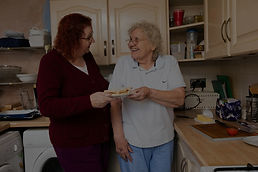
Home care can take some of this on. A trained healthcare assistant can help with personal care, moving around the home, meals and the jobs that use up energy, so your loved one can save their strength for the things they enjoy. You agree the days and hours with us, and a designated carer, with a familiar second carer for cover, gets to know your loved one's routine and adapts their help to how each day is going.
How our carers help
Washing, dressing and personal care
Preparing meals
Help moving around the home
Medication prompts
Light housework and tiring chores
Getting out and to appointments
What we don't do
Our carers do not give injections, dress wounds or administer insulin. With medication, they give prompts and reminders. If your loved one has a catheter or a feeding tube, talk it through with your care manager, who is nurse-trained and will tell you honestly what we can take on. Exercise, stretching and fatigue plans come from the MS nurse, physiotherapist or occupational therapist. We work alongside your GP, public health nurse and hospital team, who stay in charge of medical care.
Signs it may be time for more support
- Washing, dressing or showering is taking much longer, or being put off
- Fatigue means meals, housework or appointments are slipping
- There's been a fall, a near miss, or trouble on the stairs
- Family can't always be there on the harder days
- Your loved one is getting out less and seeing fewer people
- A partner or family carer is running on empty

What families say
United Irish Healthcare have been beyond any of my expectations. UIH had us sorted in a matter of hours. I cannot thank Daniel, Olivia and Jean enough — highly recommend.
Doireann Kate Gough
We use UIH for night care for our Mam. The staff have been fantastic — it is very personal and she is comfortable with her carers.
Orla Daly
For the last 8 months Mum has had two very kind carers fulfilling her wish to stay in her own home. The peace of mind is well worth it.
Verified Google review